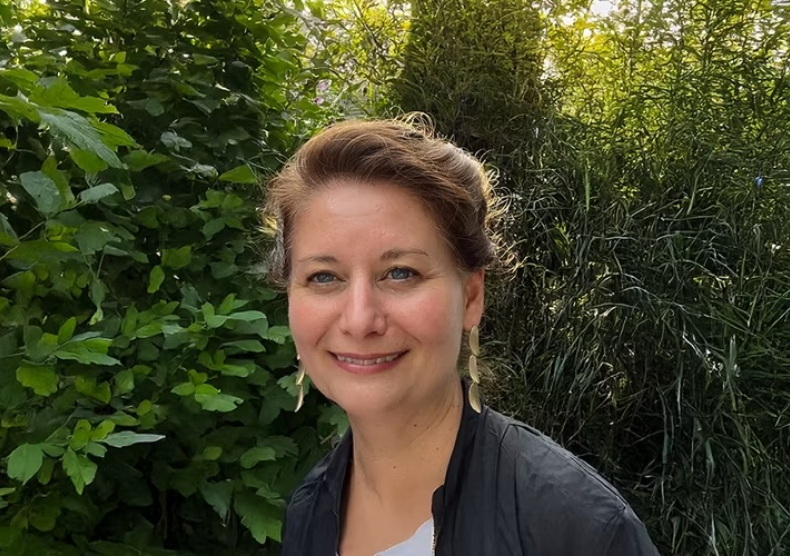
An exploration of orchestral utopianism from Berlioz to the present.
In his Symphonie fantastique (1830), Berlioz drastically expanded the size and purview of the orchestra, imagining individual instruments as dramatic characters and the orchestra itself as an ensemble able to capture the story of his life. This trajectory is extended in his Orchestration Treatise (1844, rev. 1855), which describes an even larger “festival” orchestra with the power to voice the whole of Paris, articulating its “prayers, hymns, and triumphs.” Going even further in his fictional writing, Berlioz imagined a futuristic city composed entirely of orchestral players who exist in total harmony under the baton of an all-powerful conductor. This utopian (or dystopian?) musical world has long been cited as a Berliozian hallmark, yet it is neither unprecedented nor unique. Orchestras had provided models for ideal societies before 1830, and continued to feature in futuristic writing throughout the later nineteenth and twentieth centuries, appearing in socialist, communist, feminist, cybernetic, and even intergalactic musical utopias. This talk explores some of these models, contemplating the notion of an orchestral sociology and the ongoing promise of musical ensembles as templates for human harmony.
Free, no tickets needed
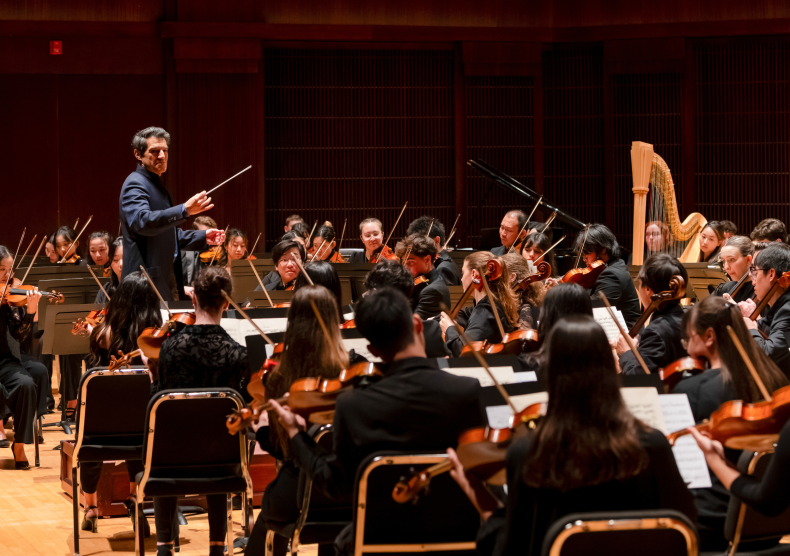
This pre-concert talk directly complements the Shepherd School Symphony Orchestra performance at 7:30pm in Morrison Theater. While the talk is free and open to the public (no tickets required), tickets are required for the orchestra performance and can be reserved here.
⸺
This talk is part of the Shepherd School of Music's new Music and Ideas Series, which explores the depths of musicology through a lineup of talks by distinguished experts and leading scholars in the field. Explore more here.
Artists
Francesca Brittan is a scholar of music and sound studies with expertise in repertories since 1800. She is the author of Music and Fantasy in the Age of Berlioz (Cambridge, 2017) and editor of two recent volumes: Berlioz and His World (Chicago, 2024) and The Attentive Ear: Sound, Cognition, and Subjectivity in the Long Nineteenth Century (Penn, 2026). Current book-length projects include Orchestral Futures: Musical Blueprints for a New Sociology, which examines how orchestras have modeled novel (utopian, dystopian, fantastic, countercultural) societies; and Sound Mind: A Resonant History of Cognition, which traces the historical role of music and sound in shaping neurocognitive theory. She has been the recipient of numerous grants and awards, including the American Musicological Society’s Alfred Einstein Award, McGill University’s Pivnicki Award in Neuro and Psychiatric History, and fellowships from the University of Cambridge, University of Amsterdam, and University of Toronto.